


Exploring Indonesia’s evolving business landscape, highlighting the importance of holistic, sustainable growth strategies for resilience.
Di tengah tekanan global dan ancaman resesi, tren pemulihan ekonomi diperkirakan tetap stabil, khususnya di Indonesia.¹ Bank Indonesia memproyeksikan pertumbuhan ekonomi nasional pada 2023 berada di kisaran 4,5–5,3%, kemudian meningkat menjadi 4,7–5,5% pada 2024, didorong oleh pertumbuhan konsumsi swasta, investasi, serta kinerja ekspor yang positif.² Meski prospek ekonomi Indonesia pada 2023 cukup menjanjikan, kewaspadaan tetap diperlukan.
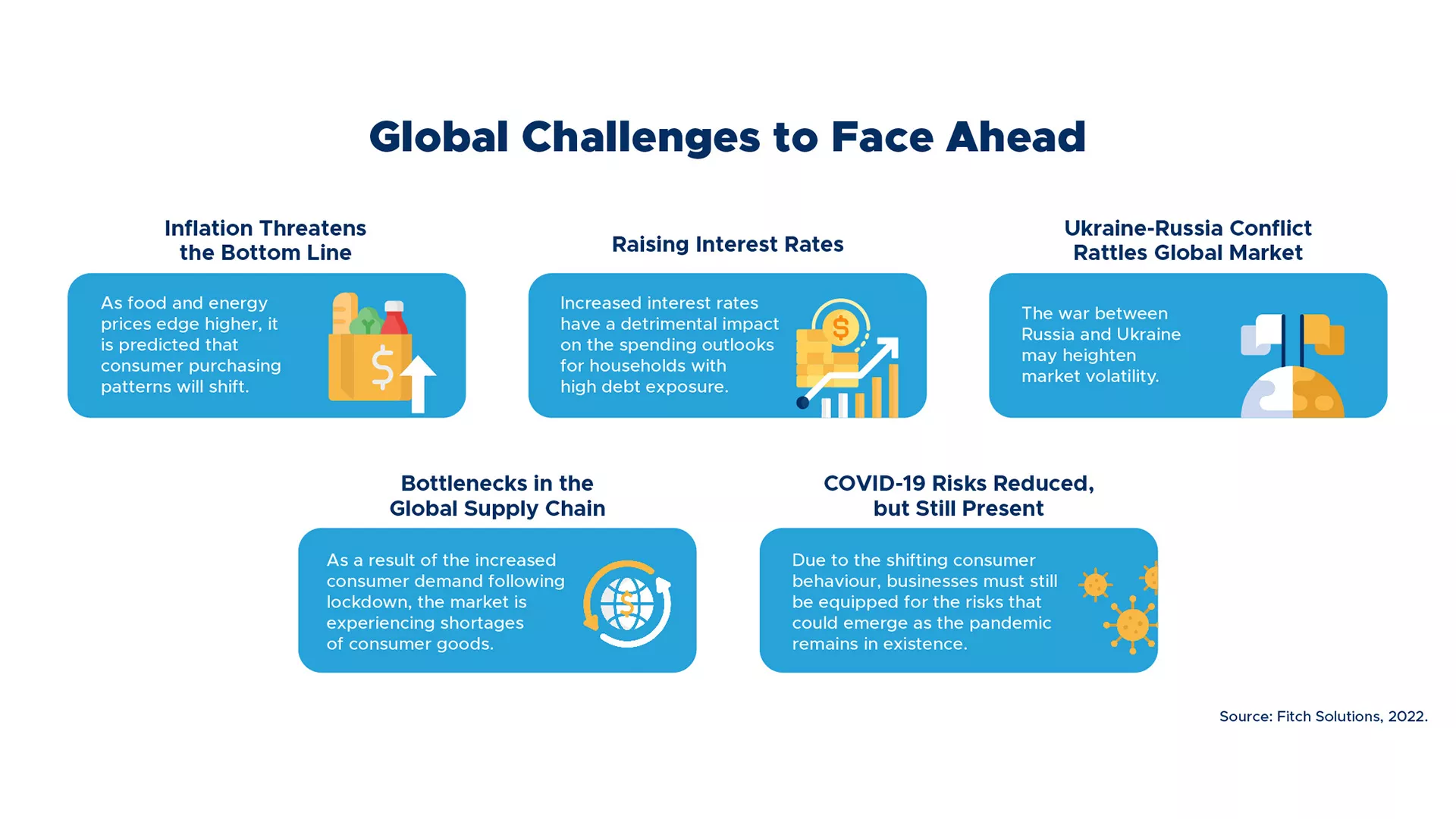
Lanskap bisnis Indonesia pada 2023 berpotensi menghadapi sejumlah tantangan akibat faktor seperti inflasi, kenaikan suku bunga, gangguan rantai pasok global, serta dampak berkelanjutan dari perang Rusia-Ukraina.
Di tengah kondisi ekonomi yang volatil dan penuh ketidakpastian, bagaimana UKM dan perusahaan di Indonesia dapat mempersiapkan diri untuk menghadapi tahun baru dengan lebih tangguh? Mari melihat berbagai tren yang muncul dalam lanskap bisnis Indonesia, praktik bisnis yang dapat mendukung keberlangsungan dan pertumbuhan, serta peluang bagi bisnis Indonesia pada 2023 dan seterusnya.
Gambaran Ekonomi Terus Bertumbuh, tetapi Tantangan Mikroekonomi Masih Ada: Cara Mendorong Penjualan pada 2023
Dibandingkan pertumbuhan sebesar 5,44% pada kuartal sebelumnya, PDB Indonesia meningkat 5,72% pada periode Juli hingga September.³ Pada kuartal III 2022, perekonomian Indonesia mencatat pertumbuhan tercepat dalam lebih dari satu tahun. Namun, para ekonom mengingatkan bahwa di tengah ketidakpastian ekonomi global yang membayangi, pencapaian tersebut mungkin menjadi titik pertumbuhan tertinggi dalam waktu dekat. Kinerja ekonomi pada tahun tersebut didorong antara lain oleh meningkatnya permintaan ekspor dan konsumsi masyarakat. Gangguan rantai pasok global yang mendorong kenaikan harga komoditas utama Indonesia turut mendukung ekspor. Selain itu, periode libur nasional dan pelonggaran pembatasan mobilitas turut mendorong peningkatan permintaan maupun pasokan.
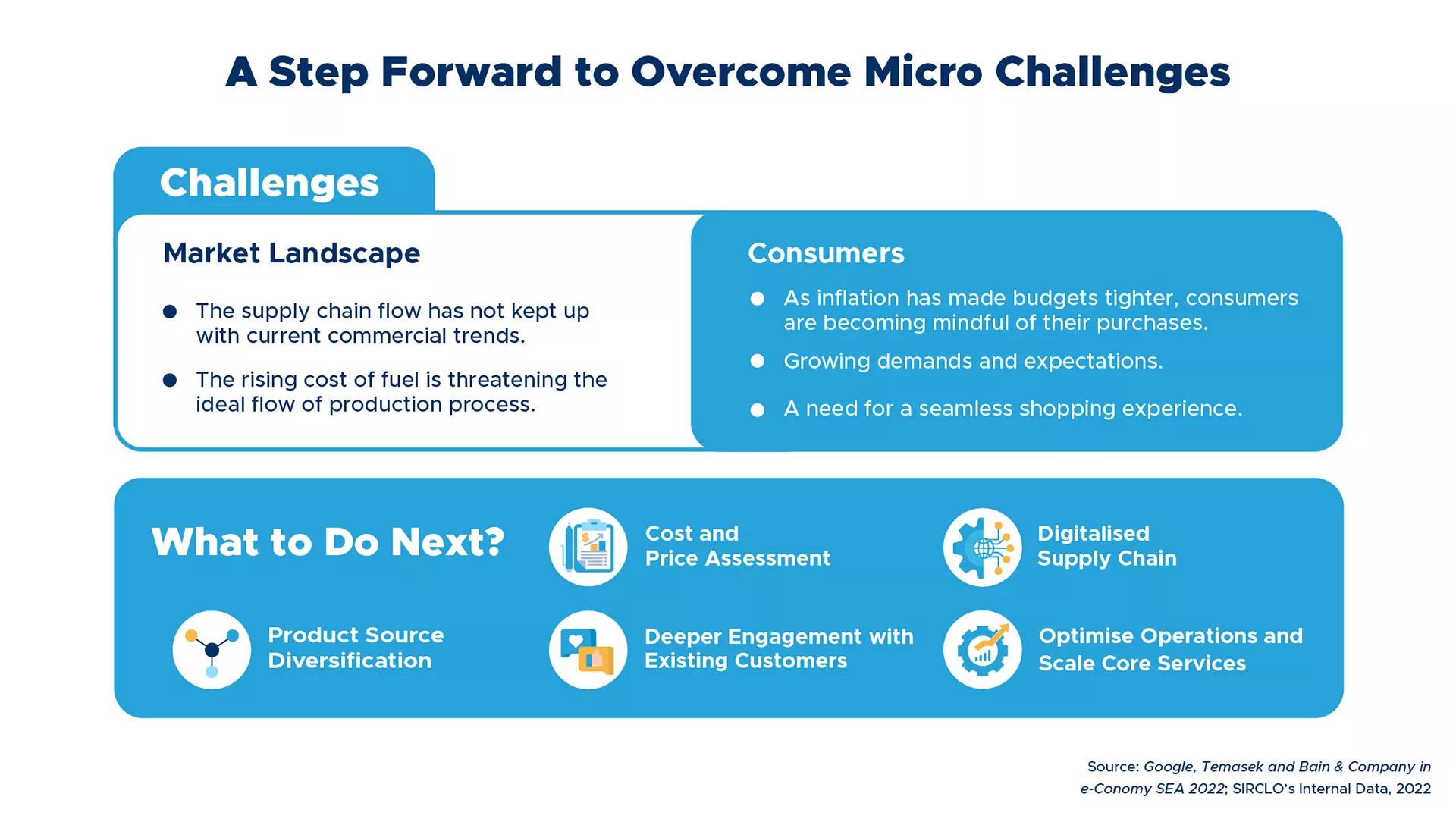
Ketika berbagai risiko pertumbuhan ditangani pada tingkat makroekonomi, tantangan masih berlangsung pada tingkat mikroekonomi.⁴ Berikut beberapa faktor utama yang memengaruhi pelaku usaha dalam kondisi tersebut.
Pelaku usaha di Indonesia perlu melihat solusi secara lebih menyeluruh, alih-alih hanya mengandalkan langkah jangka pendek yang berfokus pada satu aspek. Banyak bisnis, terutama UMKM seperti warung, mengadopsi berbagai strategi cepat dan menyesuaikan cara menjalankan bisnis sebagai respons terhadap permasalahan rantai pasok demi memenuhi lonjakan permintaan konsumen. Agar dapat bertahan dan berkembang pada 2023 dan seterusnya, bisnis perlu berfokus pada diversifikasi sumber produk, evaluasi biaya, serta digitalisasi.
Untuk meningkatkan penjualan, bisnis juga membutuhkan perencanaan logistik yang adaptif terhadap perkembangan lingkungan e-commerce. Konsumen menjadi semakin berhati-hati dalam berbelanja karena keterbatasan anggaran. Hal sederhana seperti kebijakan pengembalian barang yang jelas dan dapat diandalkan dapat memberikan rasa aman serta kendali lebih besar kepada konsumen sepanjang perjalanan pembelian, sehingga berpotensi mendukung peningkatan penjualan.
Top 4 Trends for Business Growth to Anticipate
Looking at the bigger picture
In order to enhance Indonesia's economic underpinnings, it is essential to develop resiliency against both significant and minor shocks. Businesses must apply a big-picture approach as they get ready for Indonesia's post-pandemic economy. It is important to remember that focusing on sustainable and consistent growth is one of the economic resilience methods in dealing with global difficulties. To adapt to changing consumer needs, consumption patterns, and economic situations, businesses must develop new strategies based on long-term growth rather than throwing in dramatic measures like sudden price spikes in response to inflation or a recession.
Not losing focus on “small” sales
Wealthy consumers naturally have more spending power, and companies typically focus on the higher markets for high-volume sales and profits. However, disregarding small sales would be a grave error, particularly in Indonesia, where MSMEs constitute the engine of the nation's economy and predominately sell everyday FMCG goods. Nearly all of the nation's employment—97 percent—is provided by the 63 MSMEs that account for over 60% of the GDP.⁶
The theory of comparative advantage: Reduced costs, boost sales
Price reduction could be a solution, as businesses are expected to increase profits by reducing manufacturing costs and establishing market prices. By gradually lowering their prices while maintaining a respectable profit margin from each sale, businesses can increase their market share.
Given that it aids in allocating resources to productive areas of the economy, the theory of comparative advantage could be utilised as a tool to modify the production system for competitiveness.⁷ A nation achieves comparative advantage when it produces commodities or services at a lower opportunity cost than other nations. This enables a business to offer goods and services at a lower cost than its rivals, hence boosting its profit margins. For SMEs, movements of low-cost product items that take into account other unique product characteristics, such as price and quality, are crucial under the WTO trading system in order to benefit from competitive benefits from business internationalisation.
Collaborations and partnerships are the way to go
In a post-pandemic future, collaboration and partnerships will be key to addressing the challenges faced across industries and boundaries; multiple reports⁸ and studies⁹ have said this over the last year and a half. Close collaboration and partnerships become even more pertinent in a fragmented market like Indonesia.
In the industrial era 4.0, business collaboration is a wise strategic move as it significantly affects the performance favourably. As such, collaboration becomes an excellent intervening variable for differentiated business success in Indonesia's digital sector.
Be The Future Brand, Today
The definition of success is continually changing as the world changes. Either we move forward or we run the risk of falling behind. By maximising the potential of individuals and organizations, SIRCLO’s Solutions create a bridge to the future, allowing brands of any size to remain resilient and relevant in the face of unforeseen circumstances.
Find out more at https://www.sirclo.com/home/.
Referensi
¹ https://www.weforum.org/agenda/2022/09/chief-economists-special-agenda-dialogue/
² https://www.bi.go.id/en/publikasi/ruang-media/news-release/Pages/sp_2432222.aspx
⁴ https://www.investasian.com/economic-news/indonesia-economic-problems/
⁵ https://www.invespcro.com/blog/ecommerce-product-return-rate-statistics/
⁹ https://www.weforum.org/agenda/2022/05/how-collaboration-can-help-achieve-global-recovery/