

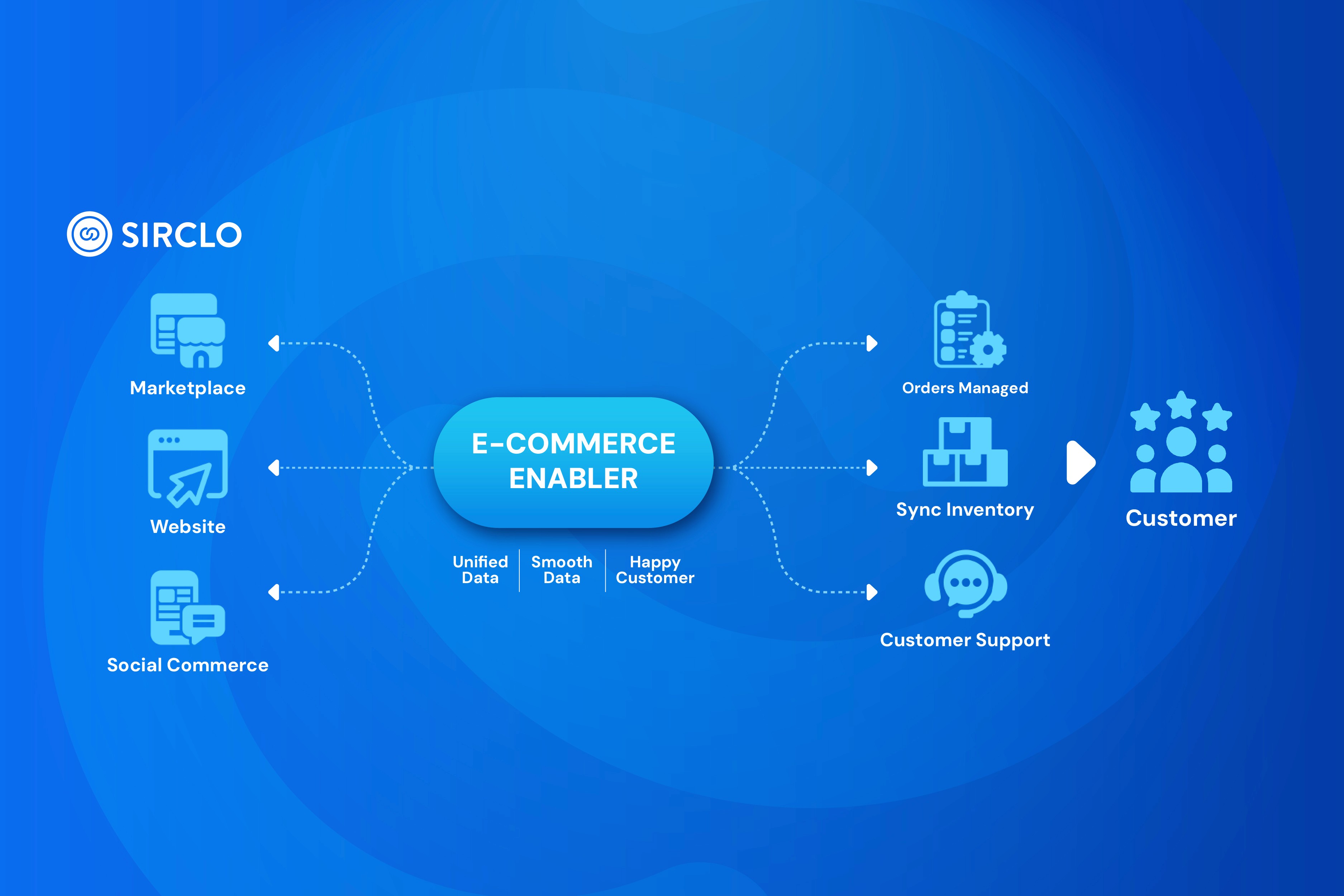
An e-commerce enabler serves as the “engine” that transforms operational complexity into structured, efficient, and sustainable business growth.
As consumers move more dynamically between online and offline shopping channels, brands are increasingly adopting omnichannel commerce strategies to deliver a more seamless shopping experience. Within this ecosystem, e-commerce has become one of the key channels for capturing digital demand and driving business growth.
This potential is reflected in the e-Conomy SEA 2025 report by Google, Temasek, and Bain, which projects Indonesia’s digital economy to reach a Gross Merchandise Value (GMV) of US$180–340 billion by 2030, with the e-commerce sector as the largest contributor. In line with this outlook, SIRCLO’s internal data also recorded more than twofold ecosystem growth throughout 2025.
However, these significant opportunities also come with increasing operational complexity. Having a presence across digital channels is no longer enough; brands need to ensure that both strategy and execution are effectively managed to drive business growth and deliver a satisfying shopping experience. What kind of solution can help brands navigate this complexity? The answer is an e-commerce enabler
What Is an E-Commerce Enabler?
An e-commerce enabler is a strategic partner that helps brands manage their digital business end-to-end, from strategic planning and sales channel management to day-to-day operations such as order fulfilment and customer service.
Its role extends beyond execution to orchestration, ensuring that every e-commerce activity remains aligned with the broader business strategy and objectives. As a result, an e-commerce enabler can provide several benefits for brands, including
Driving business growth without increasing operational burden
Improving efficiency across business processes
Maintaining consistent performance across channels
Enabling more informed, data-driven decision-making
With this support, brands can focus on strengthening their core business capabilities without having to manage operational complexity independently.
The Role of an E-Commerce Enabler for Brands

In practice, omnichannel commerce requires consistent coordination across multiple sales channels. This also makes efficient and structured e-commerce management increasingly important. The following are six key roles of an e-commerce enabler in supporting seamless business operations across digital channels:
Account Management: managing day-to-day online store activities across multiple e-commerce channels, including campaign strategy and execution, while acting as a liaison between the brand and marketplace partners to keep performance aligned with business targets.
Marketing Strategy: developing and executing promotional strategies across each marketplace channel, including discounts, bundling, and vouchers, to increase sales conversion.
Analytics: transforming sales data into consumer behaviour insights to help brands make more informed decisions for their next strategic moves.
from product photography to banners, to ensure a compelling presence across every platform.
Warehouse & Fulfilment: managing product inventory, packing, and delivery to ensure orders are processed efficiently and reach customers on time.
Customer Service: responding to customer enquiries, complaints, and support needs across multiple channels to maintain customer satisfaction and trust.
Ultimately, the role of an e-commerce enabler is to help address operational challenges while ensuring that every area of responsibility is executed consistently and effectively. With this foundation in place, brands have greater room to focus on product innovation and long-term growth.
Referensi
https://services.google.com/fh/files/misc/indonesia_e_conomy_sea_2025_report.pdf
Data Internal SIRCLO, 2026