

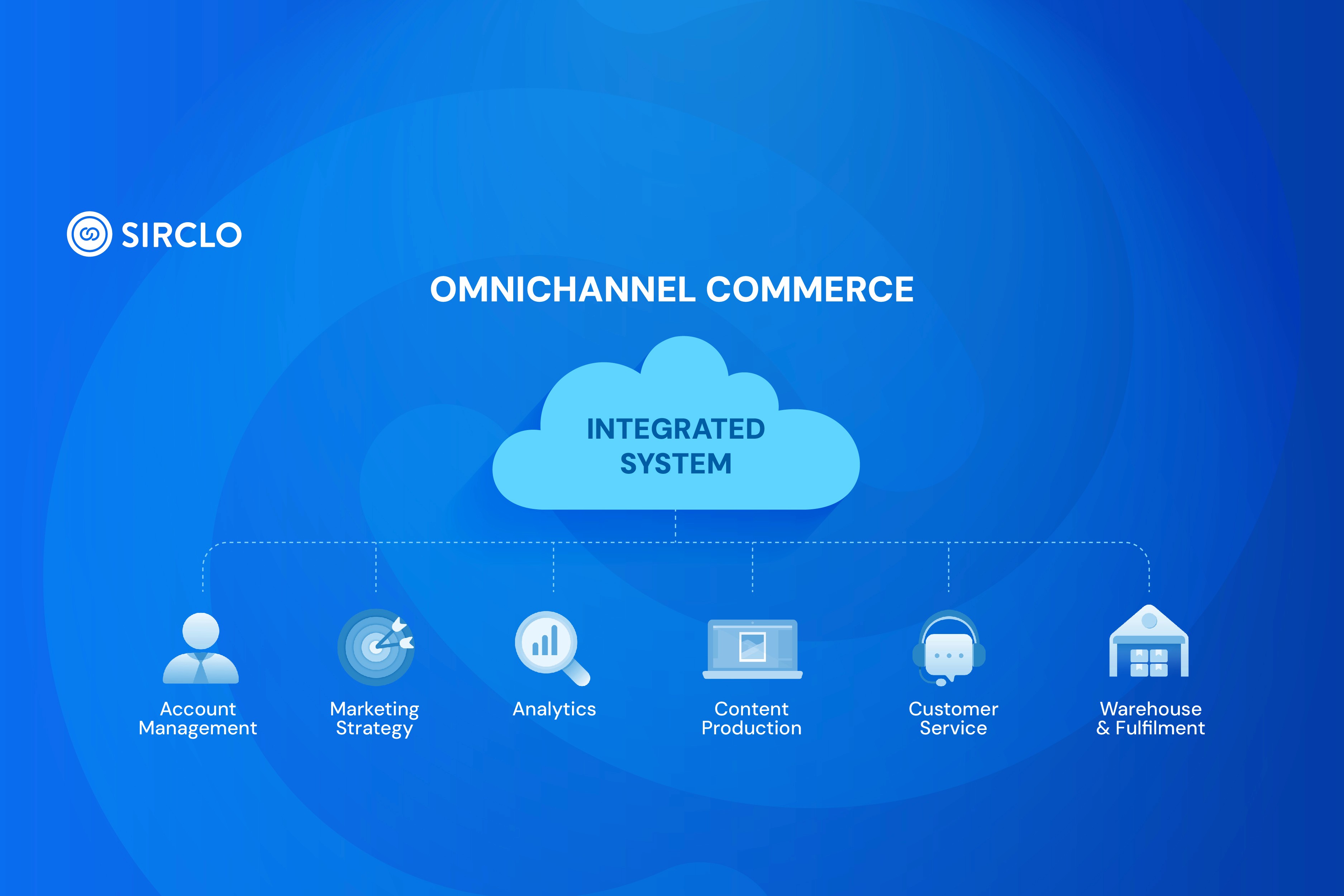
Omnichannel commerce helps brands increase revenue, strengthen customer satisfaction, and drive growth through integrated systems. Without the right integration, operating across multiple marketplaces can instead increase costs and reduce operational effectiveness.
Having explored the fundamentals of omnichannel commerce in the previous article, the next question is: “How does implementing omnichannel commerce affect brand performance amid existing challenges and opportunities?”
Many companies already operate across marketplaces, websites, and physical stores. However, having a presence across multiple marketplace platforms does not necessarily translate into stronger brand performance. Disconnected systems, fragmented data, and uncoordinated operations can often increase costs without making a meaningful contribution to growth.
In fact, omnichannel commerce is often associated with higher revenue, more stable growth, and consistent consumer experiences across sales platforms. An omnichannel approach should therefore be viewed as an enabler of growth and stronger commercial performance, rather than simply a means of market expansion. This article explores its impact on the commercial performance of brands.
Brand Complexity in the Omnichannel Era
The Indonesian Retail Merchants Association (APRINDO) reported that approximately 90% of its members have adopted an omnichannel strategy. However, many continue to face limitations in expertise, internal resources, and sufficient technology investment to implement it effectively.
The primary challenge is not the number of marketplace platforms a brand operates on, but rather the lack of system coordination across marketplaces. Transaction data is spread across multiple platforms, inventory availability is not fully synchronised, and internal teams operate with different objectives and processes. As more marketplace platforms are managed, this fragmentation can drive up operational costs, ultimately creating an outcome that runs counter to the intended purpose of omnichannel.
4 Key Benefits of Omnichannel Commerce for Brand Performance
An omnichannel approach brings its own challenges, but it can also create significant opportunities to strengthen brand performance. Here are four key benefits:
Creating Opportunities to Increase Revenue
Shopping behaviour among Indonesian consumers reflects preferences across multiple marketplace platforms. SIRCLO’s internal data shows that throughout 2025, orders were distributed across several platforms, with TikTok Shop by Tokopedia accounting for 64.8%, Shopee 25.9%, Tokopedia 7.5%, and others 1.8%. Meanwhile, research from Harvard Business Review found that omnichannel consumers spend approximately 10% more online and 4% more in physical stores than single-channel consumers.

This shows that a brand’s presence across multiple platforms can broaden market reach and strengthen brand awareness. However, the impact on revenue becomes more meaningful when all platforms are connected through one integrated system that ensures consistency in pricing, promotions, and product availability. This visibility helps reduce friction throughout the consumer journey and supports higher purchase conversion.
Supporting More Sustainable Long-Term Growth
Omnichannel commerce supports long-term growth by strengthening consumer loyalty. Healthy growth depends not only on acquiring new customers, but also on retaining existing ones, which can ultimately encourage repeat purchases.
According to the Digital Marketing Management Book, consumers who receive a consistent customer experience across multiple marketplace platforms demonstrate higher loyalty than single-channel customers. This can strengthen a brand’s competitive position and support more stable growth.
Enabling More Informed Brand Decision-Making
One of the key benefits of omnichannel commerce is greater data visibility. Integrating marketplace platforms enables brands to gain a more comprehensive view of consumer behaviour, rather than relying on data fragmented across different systems.
McKinsey states that adapting data-driven strategies to customer preferences can increase revenue by up to 10–15% when implemented effectively. With well-managed data, brands can make more analytics-driven decisions across areas such as marketing strategy, promotion management, and product development.
Turning Complexity into Competitive Advantage
In its report Omnichannel: The Path to Value, McKinsey emphasises that under an effective omnichannel strategy, inventory placement and product availability are determined by consumer needs rather than solely by the marketplace platforms a brand operates on.
This requires integrated, real-time inventory management across the entire operational and distribution network. With AI-powered analytics, brands can reduce the risk of stockouts, optimise margins, and respond more effectively to market demand.
Omnichannel commerce is more than a strategy for establishing a presence across multiple marketplace platforms. It is an integrated approach that directly supports revenue growth, creates more consistent consumer experiences across marketplaces, and strengthens long-term brand growth. By bringing data, operations, and the consumer journey together within one integrated system, brands can improve conversion, strengthen loyalty, and make more informed decisions.
Although implementation requires strategic readiness and transformation across multiple areas, more companies are recognising omnichannel commerce as a long-term investment and an important foundation for maintaining competitiveness as consumer behaviour continues to evolve.
Referensi
https://goodstats.id/article/e-commerce-paling-sering-diakses-2025-shopee-masih-juara-wyZqk
https://news.dailysocial.id/post/omnichannel-blibli-sociolla-tren-ritel-indonesia-2023/
https://www.marketreach.co.uk/blog/ultimate-guide-omnichannel
https://www.mckinsey.com/industries/consumer-packaged-goods/our-insights/state-of-consumer
Ruth Dameria Haloho, Ida I Dewa Ayu Raka Susanty, Bustang, Alfa Taufan Latif, Melkianus Teddison Bulan, Ulfia, Susanti Maria Yosefa Salu, Nita Adillah Pratiwi , Michael Gerits Kriswanto Remetwa, Esza Cahya Dewantara , Herri Wijaya, Hasriani Ishak, Malahay, N. C. M. (2025). Manajemen Pemasaran Digital (A. Fadli (ed.); 1st ed.). PT. Kamiya Jaya Aquatic.