

Effective omnichannel commerce is not defined by the number of channels a brand operates, but by technology integration that connects all sales channels within a single, real-time ecosystem.
For consumers, the checkout process often feels simple and instant. Behind that experience, however, lies a far more complex series of operations. Each channel has its own mechanisms, workflows, and data structures, making coordination across platforms a challenge in itself. This is where omnichannel commerce technology plays a critical role in bringing the entire sales process together within one coordinated system.
How Does Omnichannel Commerce Technology Address Brands’ Operational Challenges?
The operational complexity of managing multiple sales channels typically lies across several key areas, from transaction data to the consumer experience. Below are some of the challenges brands face and how omnichannel commerce technology helps address them:
Transaction Data Is Fragmented Across Multiple Platforms
Challenge: When brands operate across multiple sales channels, business performance must often be monitored through multiple dashboards and different reporting formats. This makes it difficult to gain a comprehensive view of overall performance.
Role of technology: Integration. Omnichannel commerce technology consolidates cross-channel transaction data into a centralised dashboard, allowing performance to be monitored in a more structured way.
Product Inventory Is Not Always Synchronised Across Sales Platforms
Challenge: In cross-channel operations, stock accuracy is essential to maintaining smooth sales processes. Inconsistent product availability across sales channels can lead to sales exceeding available inventory (overselling) or errors in order processing.
Role of technology: Visibility. Omnichannel commerce systems provide real-time visibility into inventory and operations, enabling brands to maintain more consistent product availability across sales platforms.
Order Management Becomes Increasingly Complex
Challenge: Orders can come from multiple platforms, each with its own mechanisms. Without a connected workflow, operational teams need to monitor several separate dashboards to ensure orders are processed correctly.
Role of technology: Simplification. Omnichannel commerce technology streamlines operations by consolidating order management across multiple platforms into one centralised dashboard, making operational processes more efficient.
The Customer Experience Is Not Always Consistent
Challenge: At every stage of the consumer journey, from product discovery and checkout to returns, the Customer Service team plays an important role. The challenge lies in maintaining consistency across the many interaction points spanning different channels.
Role of technology: Unified customer experience. With an integrated system, customer interactions can be managed through a single dashboard, giving Customer Service teams access to order histories and enabling them to provide more comprehensive support throughout each stage of the shopping journey.
How Omnichannel Commerce Systems Work Behind the Scenes
Managing omnichannel commerce involves more than connecting multiple sales channels. It also requires ensuring that every process behind those channels operates in alignment. As a business scales, systems that keep sales flows, inventory visibility, and fulfilment processes coordinated become increasingly important.
According to SIRCLO’s internal data, the SIRCLO ecosystem handles 2 million orders every month. This scale provides a clearer perspective on how omnichannel commerce systems need to operate behind the scenes. In general, operations are supported by several interconnected technology components, including:
Order Management System (OMS) to manage orders from multiple channels while simplifying the complexity of cross-platform order management.
Inventory Management System to manage real-time stock allocation and maintain consistent inventory visibility.
Channel Adapter Services to bridge differences between systems across multiple sales platforms.
Warehouse Management System (WMS) to connect digital orders with warehouse fulfilment processes.
Monitoring System to maintain process control and support risk management.
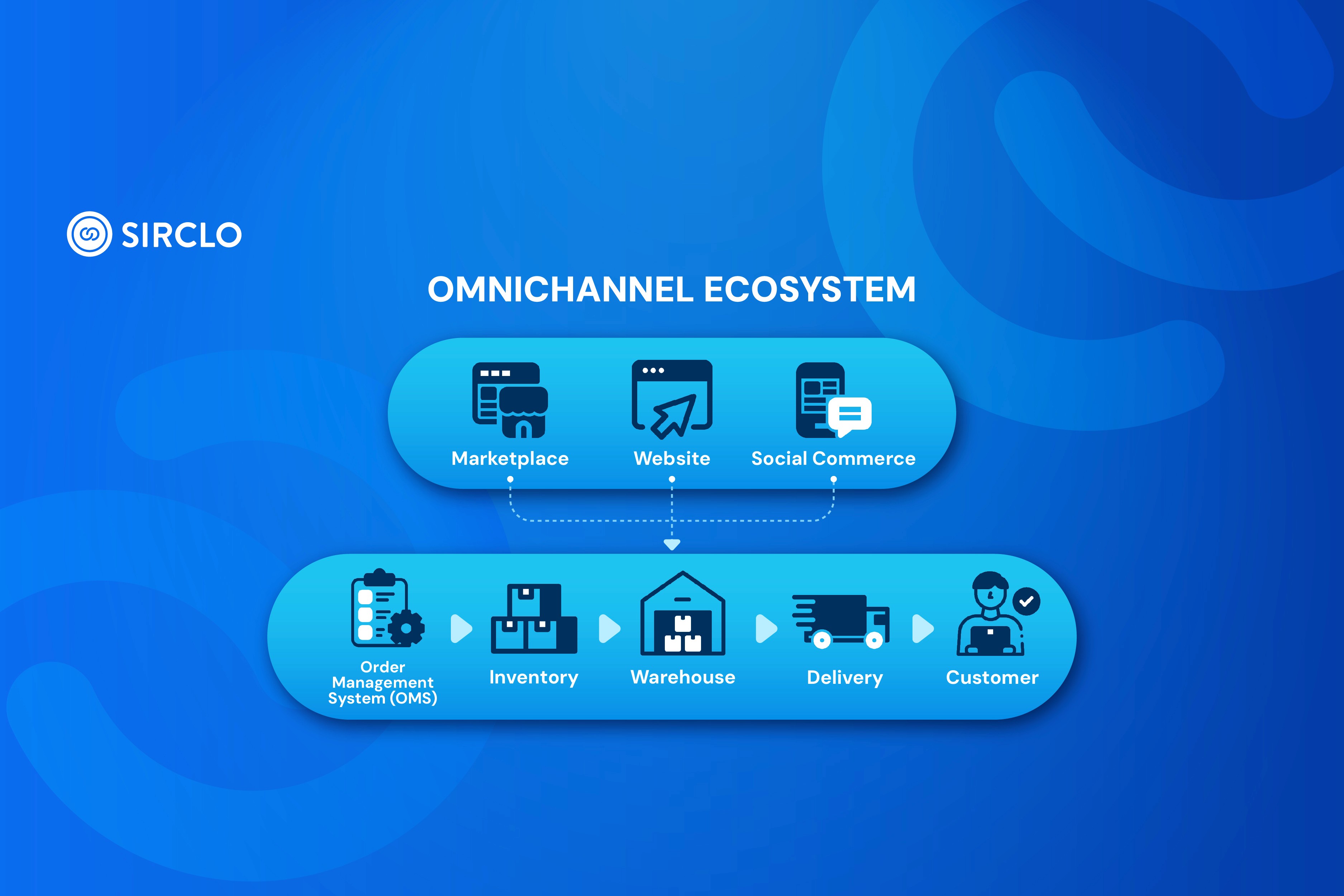
To illustrate the process more clearly, the following diagram shows the omnichannel commerce system flow, from checkout through to final delivery to the consumer:

Imagine a consumer completing a checkout through a brand’s official marketplace store or website. Once the transaction is received, the order is managed through the Order Management System (OMS), after which an automated mechanism checks stock availability in real time through the Inventory Management System. The order is then passed to the Warehouse Management System (WMS) for picking, quality checks, and packing before being handed over to the logistics provider and ultimately delivered to the consumer.
Throughout the process, consumers can track their delivery status, while the Customer Service team remains available at every stage, from helping clarify product details before purchase to providing assistance after the product has been received. With an integrated system, the online shopping experience can become increasingly seamless. For example, through same-day or instant delivery options, orders can be processed and delivered on the same day, creating a smoother and more seamless shopping experience for customers.
This is where the true value of omnichannel commerce lies: not only in helping brands expand their market reach, but also in ensuring that operations remain well managed as transaction volumes continue to grow.
Referensi
Data Internal SIRCLO