
SIRCLO found a significant acceleration in e-commerce adoption during the COVID-19 pandemic, alongside the growing trend of social commerce.
JAKARTA, 4 November 2020 – E-commerce enabler SIRCLO recently released a report examining the development of Indonesia’s e-commerce industry during the COVID-19 pandemic. Titled “Navigating Indonesia’s E-Commerce: COVID-19 Impact and The Rise of Social Commerce”, the report was developed based on a survey of 2,987 respondents conducted in June 2020. Two key findings highlighted by SIRCLO were the rapid acceleration of e-commerce adoption during the pandemic and the growing trend of social commerce, referring to online transactions conducted through messaging applications and social media platforms.
“The pandemic has accelerated Indonesia’s e-commerce industry, which is now projected to grow by 91%, far exceeding the previous forecast of 54%. This acceleration has been supported by the readiness of Indonesia’s digital economy infrastructure, particularly the high penetration of smartphones and widespread internet usage,” said Brian Marshal, CEO and Founder of SIRCLO. “We believe the e-commerce industry will continue to grow rapidly and become a key driver of Indonesia’s digital economy,” he added.
According to SIRCLO’s e-commerce trends report, 90% of Indonesia’s population was projected to use smartphones by 2025. In line with this, internet adoption among smartphone users was expected to rise to 77%. Together, these trends were projected to help Indonesia’s digital economy grow threefold between 2019 and 2025. In 2019, online shopping accounted for more than half of the total value of Indonesia’s digital economy, reaching US$21 billion. Google also projected that Indonesia’s e-commerce market would be among the fastest-growing in the world, with annual growth of up to 36.1%.
The Impact of COVID-19 and the Rise of Social Commerce
According to SIRCLO’s report, the following are some of the key impacts of the COVID-19 pandemic on consumer behaviour and the development of Indonesia’s e-commerce industry:
Accelerated growth in new e-commerce users. An estimated 12 million new users began using e-commerce during the pandemic, with 40% saying they would continue relying on e-commerce even after the pandemic ended. Under normal conditions, this level of user growth would have taken approximately 1.5 to 2 years to achieve.
Shifting payment preferences. According to SIRCLO’s survey, the use of digital wallets for e-commerce payments increased by 11% during the pandemic, while preferences for credit cards and bank transfers declined by 10% and 2%, respectively. The shift was also reflected beyond e-commerce transactions. Bank Indonesia recorded that the number of electronic money transactions in April 2020 was 16.7% higher than the previous month, while transactions using debit and credit cards fell sharply by 37%.
Growth of social commerce. According to SIRCLO’s report, social commerce was expected to continue growing and account for 40% of total e-commerce transactions by 2022. The report found that 94% of respondents said conversational interactions, including through WhatsApp, Facebook, and Instagram, had a strong influence on their purchasing decisions. Indonesian consumers were also more likely to purchase when sellers responded quickly to their messages and enquiries.
Key Trends During the 2020 Shopping Festivals Amid the Pandemic
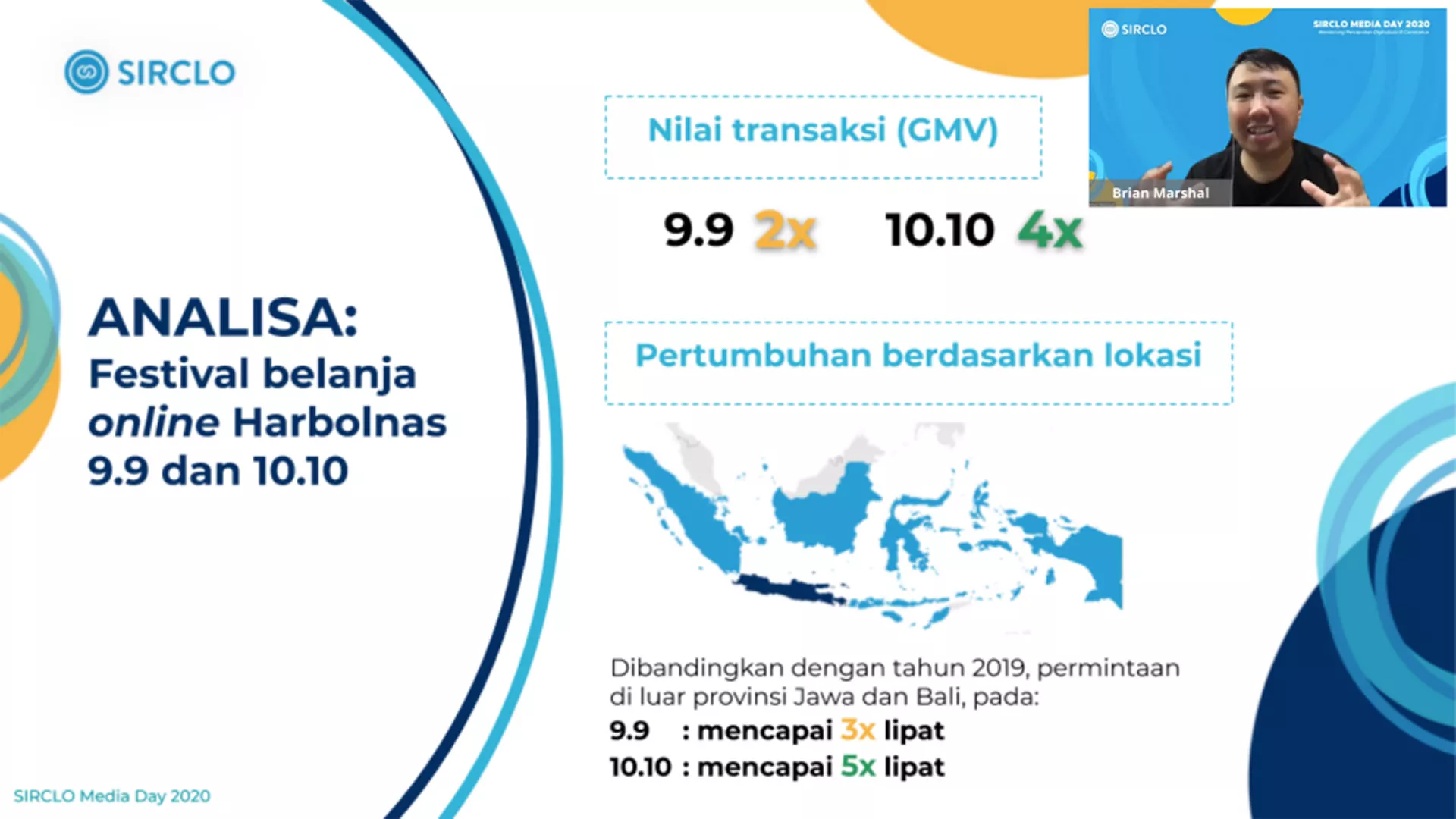
Shopping festivals such as 9.9 and 10.10 represented important opportunities for SMEs and brands to drive online sales. Despite the ongoing pandemic, consumer purchasing power remained strong. This was reflected in both the number of orders and transaction value during the 10.10 shopping festival, which increased fourfold compared with the previous year. “According to our internal data, the top-performing categories during the 9.9 and 10.10 online shopping festivals were Personal Care, including hygiene products, Home & Living, including kitchenware and household products, Food & Beverages, and Fashion & Lifestyle,” Brian explained.
During the 9.9 shopping festival that year, visitor traffic peaked at midnight, 11:00 a.m., and after 8:00 p.m., following the announcement of large-scale social restrictions (PSBB) in Jakarta. During 10.10, the highest traffic was recorded at midnight, around midday during lunch breaks, at 6:00 p.m. after working hours, and at 11:00 p.m., coinciding with flash sale periods. These shopping patterns closely aligned with promotional periods such as clearance sales, flash sales, and live-streaming sessions.
That year, strong demand was no longer concentrated solely in Java and Bali, but was also seen in other provinces such as West Sulawesi, Central Sulawesi, and Bengkulu. During the 10.10 shopping festival, demand from outside Java and Bali increased fivefold compared with the previous year. This trend highlighted the growing opportunity for brands to reach and attract more consumers beyond Java and Bali.
3 Strategies to Help Brands Succeed During Harbolnas 2020
Based on the findings above, here are three strategies brands can adopt to strengthen their performance during Harbolnas, particularly for the 11.11 and 12.12 shopping festivals:
Invest in Building Brand Awareness
Brands should allocate budget for paid advertising on prominent placements across marketplaces and social media, particularly around peak shopping hours. It is also important to consider where audiences are coming from, rather than focusing only on high-traffic areas where competition may also be more intense.
Tailor strategies to each sales channel and product
Each online sales channel has its own distinct consumer segments and demographics. Brands therefore need to understand their customer profiles based on both demographic and behavioural data, including traffic, basket size, and conversion rates. From there, they can identify areas for improvement and develop the most appropriate strategy.
For example, if basket size remains relatively low, brands can encourage larger purchases through product bundling. To make this strategy effective, however, brands need to ensure that the products offered together are complementary. The stronger the relevance between bundled products, the greater the value of the overall offer.Collaborate with Popular Brands or Products
To stay relevant to consumers, brands need to keep up with the latest trends and remain open to collaborating with other popular brands. Beyond the opportunity to expand market reach, such collaborations can create added value without requiring brands to change their core business direction. Alternatively, brands can offer popular or highly sought-after products as bonuses or gifts. For example, a fashion brand could offer a hat or cloth mask as a complimentary accessory for customers to wear when going out.
“In 2021, SIRCLO will focus on expanding its products and services while strengthening its strategic position as a leading e-commerce enabler. Our plans include launching several new features, such as a wider range of innovative online store templates, developing omnichannel capabilities for enterprise businesses, and working with partners in areas such as cloud hosting, including Google Cloud Platform, and payment systems to provide better services for every customer,” Brian concluded.
***
About SIRCLO
Founded in 2013, SIRCLO is an e-commerce enabler that offers four business solutions to help brands sell online: SIRCLO Store, SIRCLO Connexi, SIRCLO Chat, and SIRCLO Commerce. SIRCLO Store is a Software-as-a-Service (SaaS) platform that enables local businesses and brands to build template-based online stores. SIRCLO Connexi provides an interactive dashboard for managing sales across multiple e-commerce platforms in Indonesia. Meanwhile, SIRCLO Chat offers a conversational commerce platform through an interactive dashboard integrated with the WhatsApp Business API. Through its end-to-end channel management solution, SIRCLO Commerce supports enterprise brands in expanding into online distribution channels.
In May 2020, SIRCLO officially merged with ICUBE, a Magento Premier Solutions Partner in Indonesia, strengthening its e-commerce technology development capabilities and adding SWIFT, an omnichannel e-commerce builder, to its portfolio. SIRCLO Store had powered more than 100,000 websites and helped 3,000 brands grow their businesses online, including ATS The Label, Benscrub, Evete Naturals, Namaste Organic, This Is April, and Heytimmy Kidswear. SIRCLO was also trusted by dozens of clients representing more than 300 leading brands, including Unilever, Reckitt Benckiser, KAO, L’Oréal, Eiger, and Levi’s.