

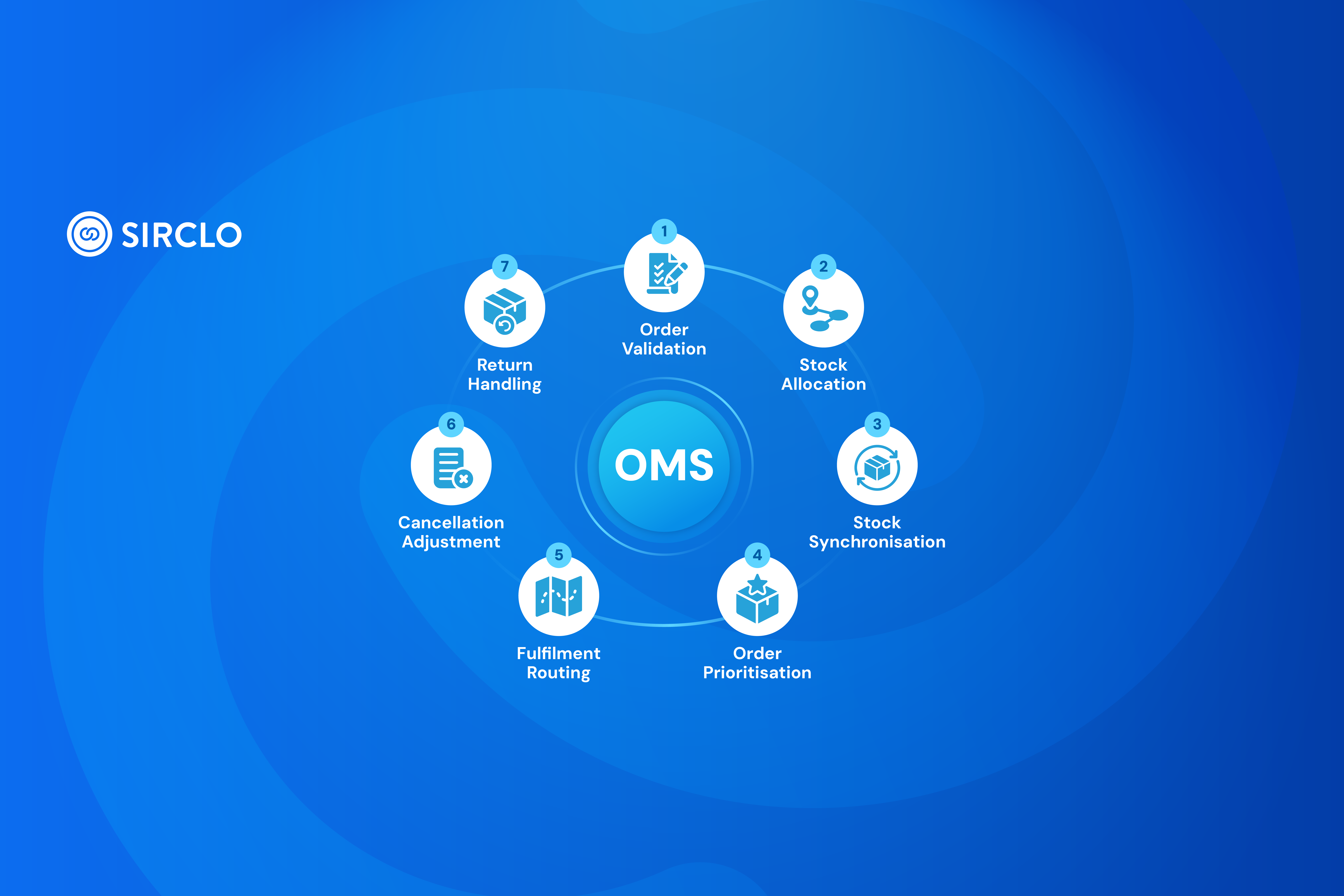
OMS serves as the orchestration centre that connects orders, inventory, and fulfilment processes within an integrated system, enabling e-commerce operations to run more accurately, efficiently, and measurably as transaction volumes increase.
For consumers, the online shopping process appears simple. After selecting a product and completing checkout, the order is processed until it eventually arrives at their doorstep. Behind this experience, however, lies a much more complex operational process.
Once an order is received, the system needs to ensure product availability, match inventory with storage locations, determine processing priorities, and route the order to the warehouse for preparation and delivery. As transactions increase, these processes must be executed quickly and accurately to maintain smooth operations.
This complexity becomes even more apparent within an omnichannel commerce ecosystem. Orders can arrive simultaneously from multiple marketplaces, websites, and other digital shopping channels. To ensure all orders are processed accurately and consistently, businesses need a system that can centrally coordinate every operational step.
In a previous article, SIRCLO explored how technology helps connect multiple sales channels within omnichannel commerce. This time, we take a closer look at one of the key components behind this process: Order Management System (OMS).
What Is OMS?
Order Management System, commonly known as OMS, is a system that collects, organises, and routes orders from multiple sales channels to the next stage of the operational process.
Simply put, OMS can be viewed as the brain that manages order flows. When transactions enter from multiple sources, the system ensures that orders are recorded accurately, inventory is available, and fulfilment processes follow the defined operational flow.
A similar perspective is highlighted in academic research by Hanuman Reddy Gali in the Journal of Information Systems Engineering and Management, which explains that OMS acts as a central business process orchestration system, connecting customer, warehouse, financial, and supply chain systems to ensure operations run in alignment.
In practice, OMS performs several key functions to ensure every order is processed effectively:
Managing orders from multiple sales channels within a centralised system.
Verifying product availability before orders proceed to the next stage.
Automatically allocating inventory for each incoming order.
Maintaining inventory synchronisation between the system and actual stock conditions.
Breaking down bundled orders into individual products so each item can be managed separately.
Prioritising orders for processing based on applicable operational rules.
Prioritising specific orders, such as instant or expedited delivery requests.
Determining the most suitable fulfilment location based on inventory availability.
Managing transaction cancellations and required inventory adjustments.
Within this process, OMS acts as a coordination layer that keeps order flows organised, from order receipt through to fulfilment. By automating order, inventory, and delivery management within a centralised system, OMS enables real-time order tracking and helps minimise operational errors.
What Happens After an Order Is Received?

When consumers complete checkout, orders are not immediately sent to the warehouse. Several processes need to take place to ensure the order is fulfilled correctly.
First, OMS receives and validates order information from sales channels, including purchased products, quantities, delivery addresses, and selected delivery methods.
Second, OMS checks inventory availability and allocates products for the order to prevent the stock from being allocated to another transaction. This process helps reduce the risk of inventory being oversold.
Third, OMS determines the most suitable order processing location. In operations with multiple warehouses or distribution points, the system selects a location based on inventory availability and applicable processing rules.
Fourth, OMS helps manage more complex scenarios, such as bundled orders, transaction cancellations, product substitutions when inventory is unavailable, and orders requiring faster delivery prioritisation.
For consumers, this entire process is typically only visible through order status updates. Behind these updates, however, OMS ensures every step runs in the correct sequence, from order receipt through to fulfilment preparation.
Why Is OMS Important in Omnichannel Commerce?
As businesses grow, operational challenges do not only come from increasing order volumes, but also from the growing number of sales channels, storage locations, and processes that need to operate simultaneously.
OMS becomes increasingly important as transaction volumes grow. Within SIRCLO’s operational scale of managing more than 80 principals, 150 brands, and processing an average of 2 million orders every month, visibility and coordination across processes are just as important as processing speed. During peak campaigns, such as double day and payday, transaction volumes can increase to an average of 200,000 orders in a single day.
Apa Risiko Jika Tidak Ada OMS?
What Are the Risks Without OMS?
Without OMS, orders from each channel need to be monitored and processed separately. This approach may still work when order volumes are limited. However, as transactions increase, operational complexity grows accordingly.
Order information may become fragmented across multiple systems, inventory becomes harder to synchronise, and operational teams require more time to ensure each transaction is processed correctly. As a result, the risk of processing delays, inventory discrepancies, and missed orders increases. This may also prevent businesses from meeting the service standards expected by each sales channel.
Ultimately, operational success is not determined solely by warehouse capacity or delivery speed. By bringing order information, inventory, and fulfilment processes together within one system, OMS becomes a key foundation of omnichannel commerce, enabling operations to remain consistent even as transaction volumes continue to grow.
***
Related Articles
To learn more about how technology supports omnichannel commerce operations, read SIRCLO’s related articles:
Referensi
Referensi:
Data Internal SIRCLO
Gali, H. R. (2025). Understanding Order Management Systems in Retail and E- Commerce. 10, 1066–1077.